Berachain's Pre-Deposit Campaign: A Case Study in Liquidity Bootstrapping
 Yield Network
Overview
The Berachain pre-deposit campaign (aka Boyco) quickly became one of the most talked-about experiments in attracting liquidity ahead of a blockchain launch. With a mix of strong branding, point incentives, and a community already primed from its testnet, the campaign offered valuable lessons on how pre-launch capital formation can succeed or fall short.
Berachain is an EVM-compatible layer 1 blockchain utilising the Proof-of-Liquidity consensus mechanism. Its main pre-deposit campaign partner was Royco, which uses the concept of an IAM (Incentivise Action Markets), allowing anyone or projects to create a market for any onchain action and incentivise them.
The campaign was first officially announced on Sept. 25, 2024, offering participants to earn a share of BERA token allocations. Within weeks, Royco saw deposits accelerate, achieving over $3B ahead of Berachain's mainnet.
The timing of big inflows closely tracked key announcements on partnerships and farmable points integrations like Lombard and StakeStone, Ethena and Concrete, EtherFi and Veda, and many more. The pre-deposit officially closed Feb 3, 2025, marking the beginning of a new journey (Mainnet) for Berachain. Also, note that funds were locked for 90 days after deposits closed.
Incentives and Budget
Berachain allocated a total of 15.8% of its total supply to airdrop, out of which 2% (10,000,000) was towards the Boyco initiative. This was not "cash on the table", but rather a forward claim on future BERA tokens, meaning incentives were high-perceived value, but low-cost until token generation.
Retention and Stickiness
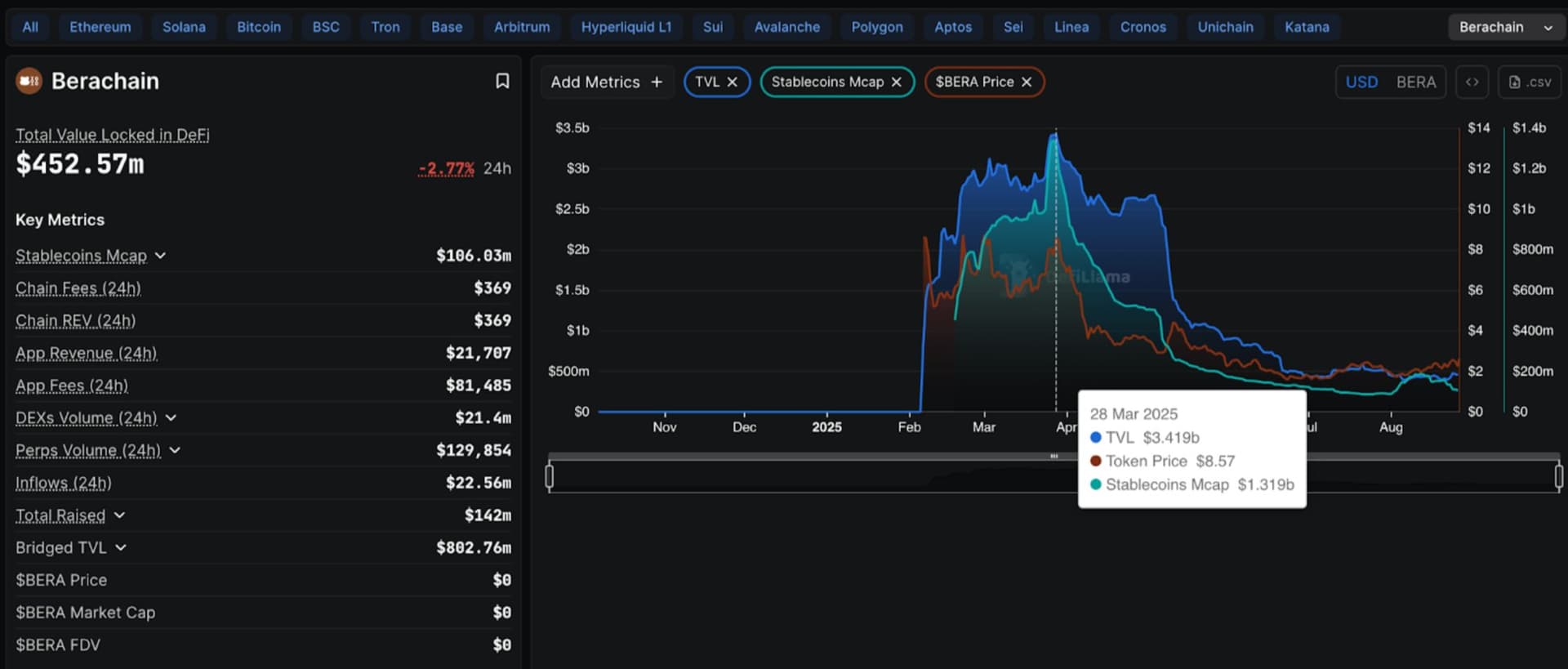
When deposits opened, capital rushed in fast, but retention is where the campaign really stands out. Weeks after deposits closed and mainnet launched, Berachain retained a significant majority of deposits; this might be because deposits were locked for 90 days. The rewards for this campaign were also scheduled to be distributed after the lock period to keep users around and also make the liquidity useful for both the protocol and users. Berachain's TVL reached a peak of $3.42B in March, according to DefiLlama, around the time POL was also officially launched on their mainnet.
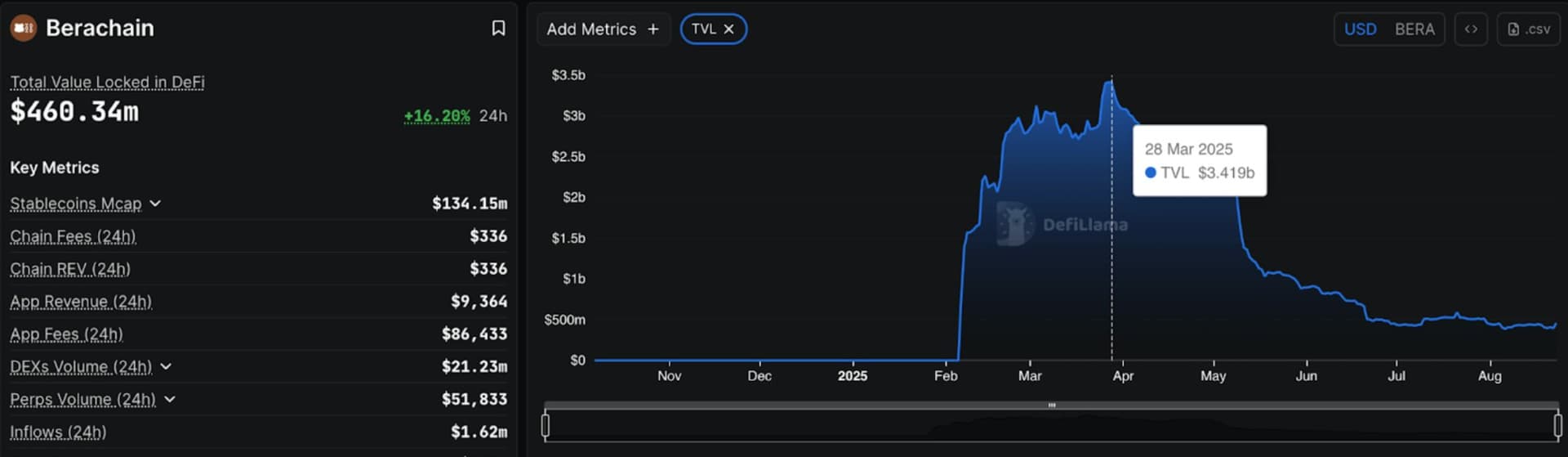
Despite achieving initial success, Berachain's TVL fell sharply after reward distribution, revealing significant flaws in Royco's model that hinder the sustainable growth of the ecosystem. This research highlights Berachain's pre-deposit vault program, which was effective at drawing initial capital but failed to sustain long-term. For the past 6 months, Berachain's TVL has been on a downtrend. This shortcoming seems to arise from different observations, like users' expectations vs reality due to hype, community sentiment, private LP deals, capital inefficiency, and lack of sufficient emissions.
With the TVL decline, headline retention was pretty low, and we can compare the campaign to similar campaigns like Blast early deposits and Sonic points program, which had declines in TVL after reward distributions.
Mechanics and Operations of Boyco
Berachain partnered with several projects to bring the Boyco campaign to life and make it seamless for both applications and liquidity providers.
Royco was the core infrastructure for the Boyco campaign.
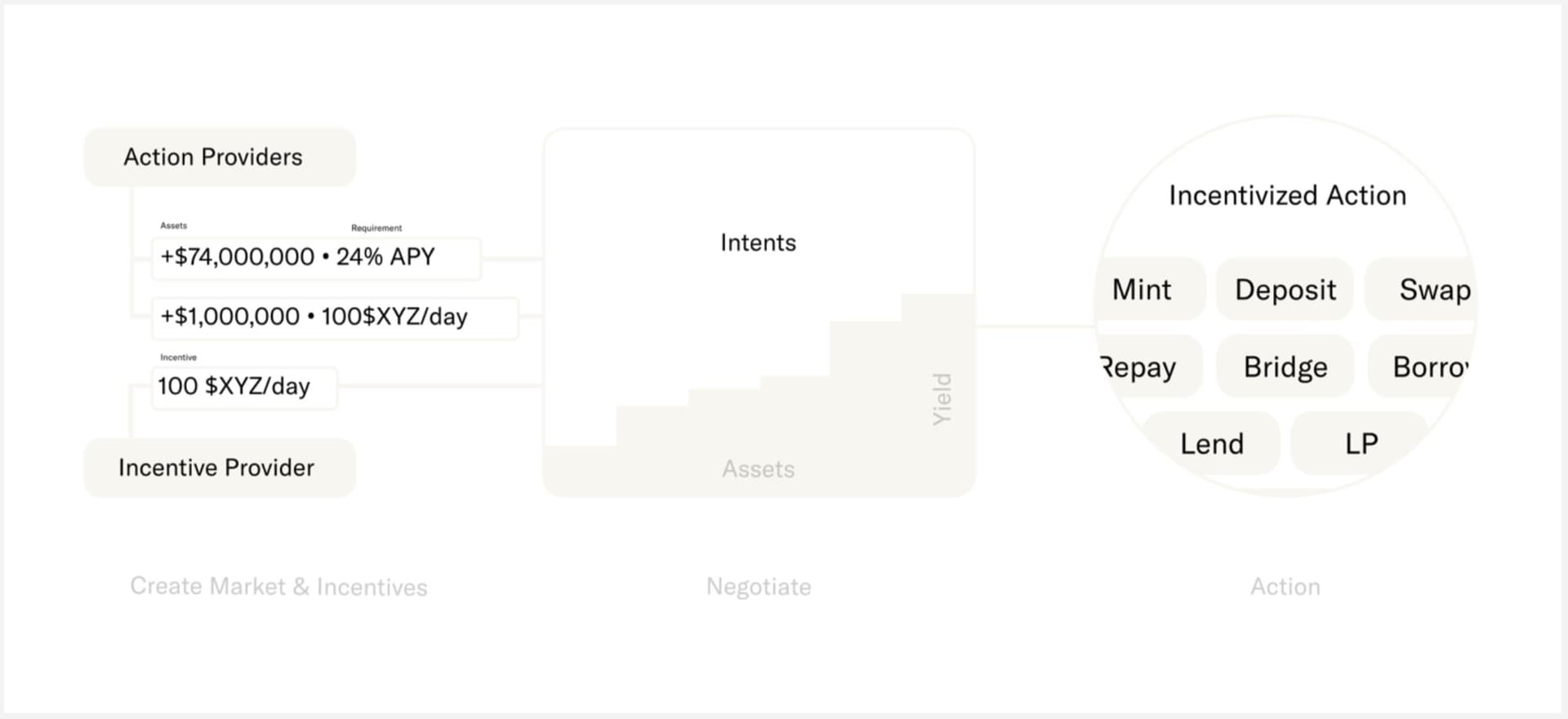
Royco provided a transparent and efficient marketplace that allowed dApps to offer liquidity incentives directly to their users. It eliminates the reliance on intermediaries or unclear negotiations.
Royco integrates the ERC-4626 standard (aka the Tokenised Vault Standard), designed to create tokenised vaults that represent shares of yield-bearing tokens. This enabled protocols to be able to track deposits, rollover funds or receipt tokens to the new chain on mainnet and even distribute rewards easily. Royco is also audited by SpearBit.
Talking about interoperability, liquidity providers were able to deposit funds from different blockchains during the campaign; this was made possible by the LayerZero and Stargate technology. This cross-chain accessibility ensured that participants were able to quickly, securely, and transparently deposit various assets, like USDC, USDT, DAI, wETH, wBTC, and even LSTs.
Enso was another crucial part of the Boyco campaign, enabling liquidity access for applications on day one of the Berachain mainnet. Enso powered Boyco with day-one execution across all DeFi protocols, native asset routing on, and pre-pre-deposit routing (deposits through partner protocols).
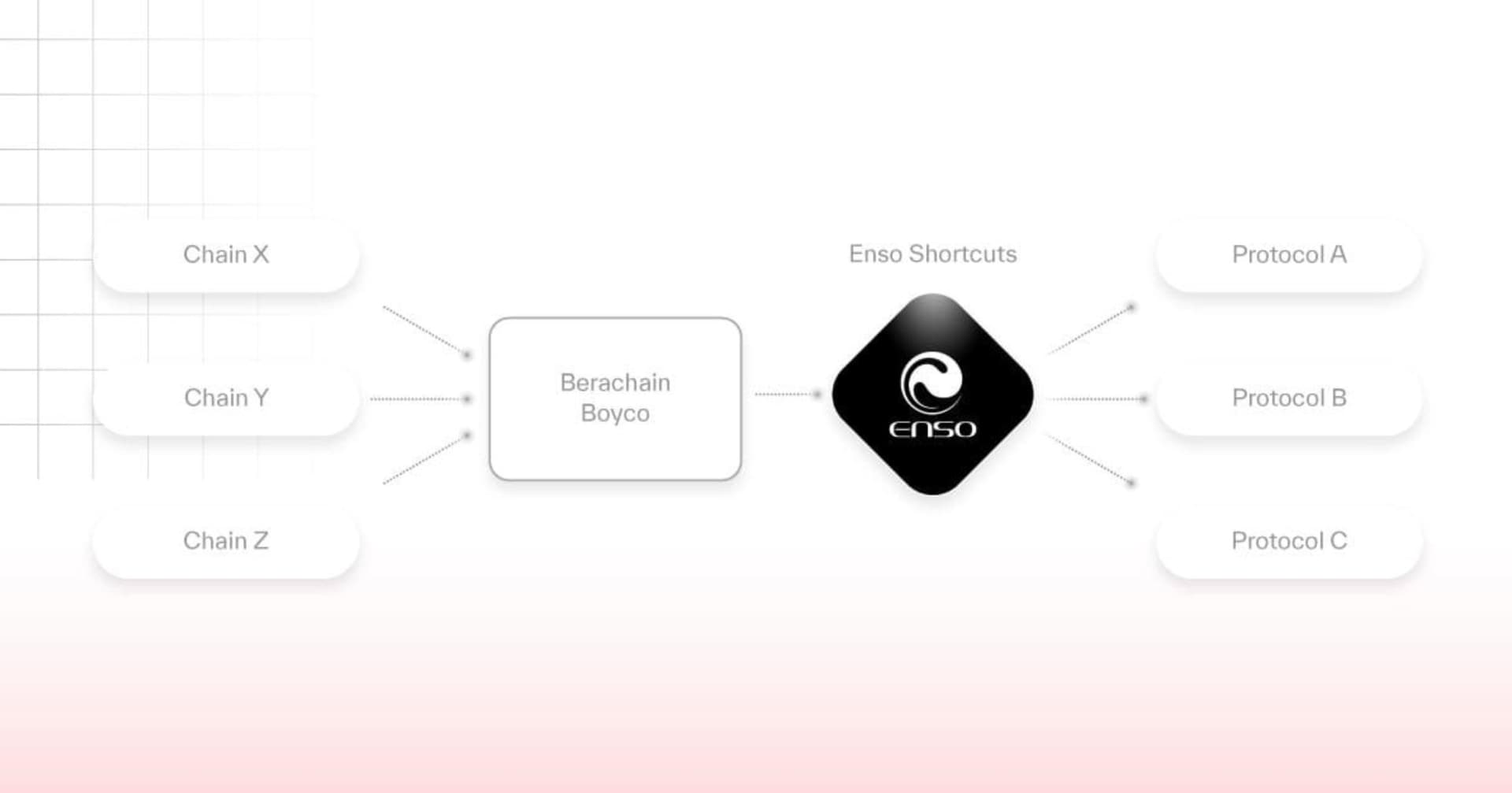
In short, Boyco worked in these few steps:
- Applications create Royco markets, define trading parameters, and provide incentives.
- Liquidity providers (LPs) review and negotiate on-chain quotes, directly committing to provide locked funds for a specified term.
- Assets are bridged to the Berachain mainnet via LayerZero and Stargate.
- Liquidity is immediately deployed into smart contracts through Enso Shortcuts after the mainnet launch of the application.
The Momentum
The pre-deposit vault provided accessibility to Boyco participants, allowing them to make deposits from various networks and also to boost the pre-deposit TVL ahead of the official launch of Boyco in late January. This marked one of the earliest large-scale "pre-deposit vaults" in DeFi, directly tied to mainnet anticipation. With high curiosity and a sense of FOMO, users saw this as a way to secure early exposure to BERA. Each project designed its own pre-deposit rules. Typically, the funds deposited by users will be bridged to the Berachain mainnet after its launch. Early participation in the pre-deposit enabled users to receive pre-launch incentives, including exclusive multipliers and rewards from partners.
Pre-Deposit Vaults Launch
The first set of pre-deposit vaults was launched on Dec. 25, 2024, with StakeStone, Lombard, and Concrete.
1. StakeStone Vault
StakeStone initially launched the ETH vault, where users can deposit ETH, STONE, and WETH for the receipt token "beraSTONE". Later on, the BTC vault was launched on Jan 6, 2025, where users can deposit SBTC, cbBTC, and WBTC for the receipt token beraSBTC.
The StakeStone vault structure consists of 2 key components:
- Vault and Vault LP Token: After users deposit funds, the Vault generates Vault LP Tokens as proof of their yield, which can be used in other DeFi strategies to maximise yield.
- Multi-scenario applications of LP Tokens: Vault LP Tokens can be used to provide liquidity on DEXs like Uniswap to earn trading fees, engage in yield futures trading on Pendle, or serve as collateral on lending platforms like Morpho to generate additional interest income.
Participants only need to make a single deposit. The liquidity locked in the Vault is then issued as Vault LP Tokens, which can be used in various DeFi yield strategies. The Vault automatically allocates the funds across multiple yield strategies on the Berachain mainnet, maximising the capture of BERA token emissions without requiring user interaction.
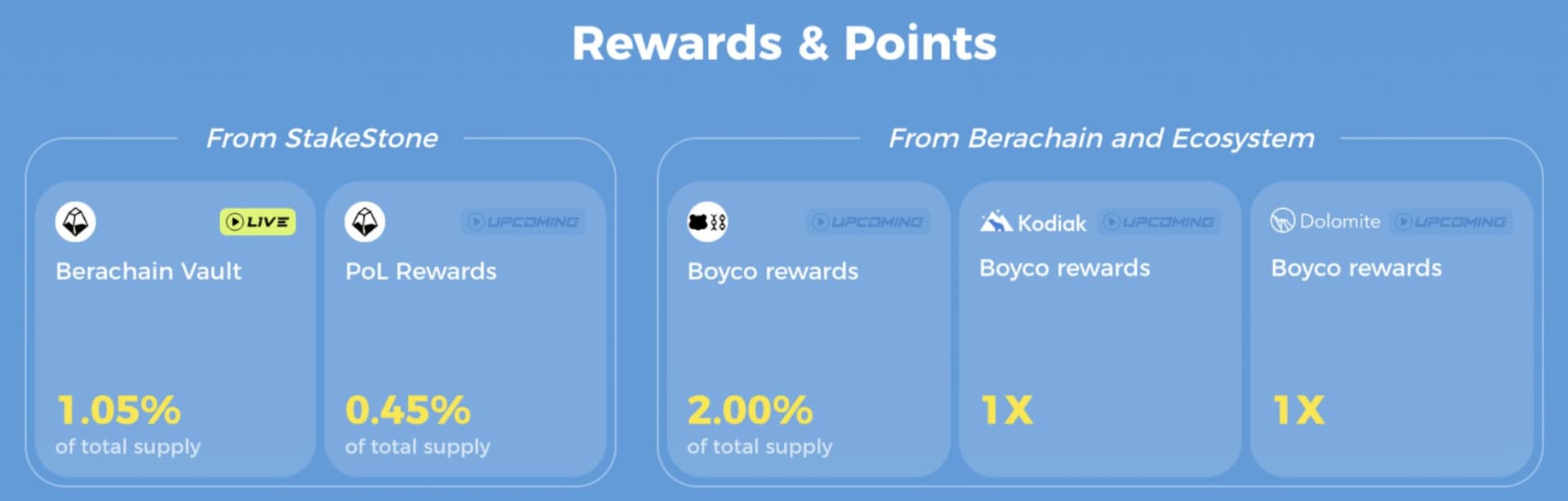
Rewards offered to StakeStone depositors included:
- Up to 15 million $STO (1.5% total supply)
- BERA incentive (1.05% of total supply)
- Ecosystem project rewards from Kodiak and Dolomite
StakeStone vault participants could also boost their rewards through different playbooks:
- Limited 2x Bera-Wave Points boost by holding beraSTONE, or 5-6x by providing active liquidity on Uniswap.
- The first 10k folks that deposited at least 0.042 ETH or 0.0015 BTC earned an extra 150 $STO.
- Use an invite code for a 10% Bera-Wave Points boost, and earn 20% referral rewards by inviting others.
Bera-wave points were tied to their StakeStone airdrop, while the rewards from the Berachain ecosystem (Boyco) are determined by the amount and time duration of beraSTONE/beraSBTC you hold or use in DeFi.
The true innovation of StakeStone Berachain Vault lies in linking emerging Berachain ecosystems with mature networks like Ethereum (or other EVM chains) through secondary utilisation and deep unlocking of assets, creating a "multi-layered yield" flywheel effect.
2. Lombard Vault
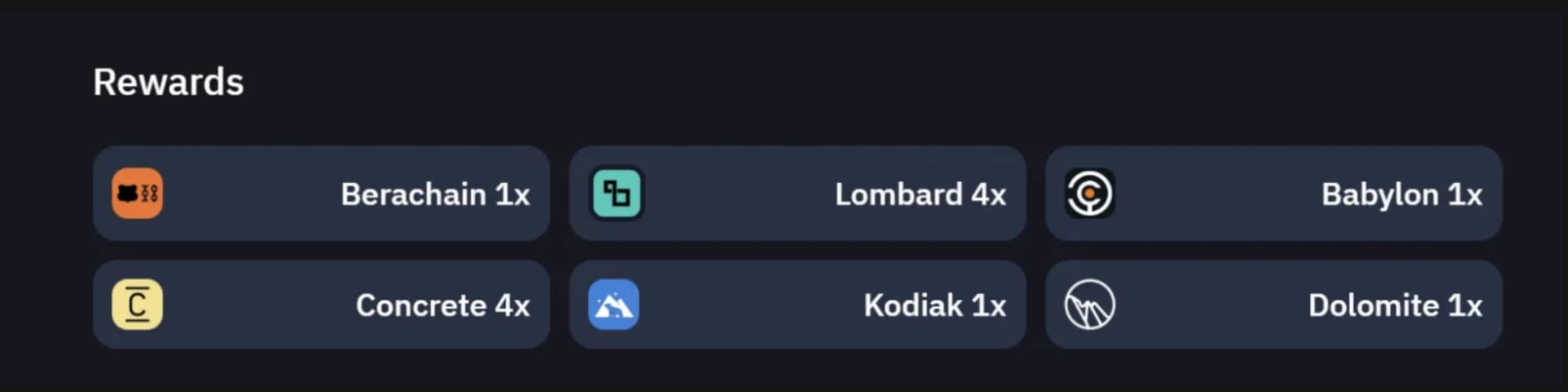
The Lombard vault, also launched on Dec. 25, 2024, was built in partnership with Concrete to enable new use cases and power yield for Bitcoin. Participants were able to deposit LBTC and wBTC to get exposure to the following rewards:
- $BERA incentive
- 4x Lombard points
- 1x Babylon points
- 4x Concrete points
- 1x Kodiak points
- 1x Dolomite points
That's like killing 6 birds with one stone; the benefits were too juicy to ignore.
The vault worked in such a way that users deposit LBTC or wBTC into the Bitcoin Bera Vault on Mainnet, and they receive a receipt token in their wallet. Once the Berachain Mainnet launched on Feb 6, 2025, the vault deployed the funds across a variety of strategies using Dolomite, Kodiak, and other partner protocols to generate real yield. Points accrued for 14 weeks, until April 14, 2025, after which withdrawals were opened.
The Lombard Bitcoin Bera pre-deposit vault, operated by Concrete, attracted 3,500 users with $350M in deposits upon the official Boyco launch.
3. Ethena Vault
On Dec 28, 2024, Berachain announced the Ethena vault, in collaboration with Concrete, representing the first avenue for participants to keep stablecoin exposure to the Boyco campaign and also gain access to Berachain rewards and its ecosystem. Users could deposit USDe, sUSDe, or use USDC and USDT to swap and deposit, with multipliers from Ethena and Concrete, on top of the BERA incentive, and Berachain ecosystem rewards.
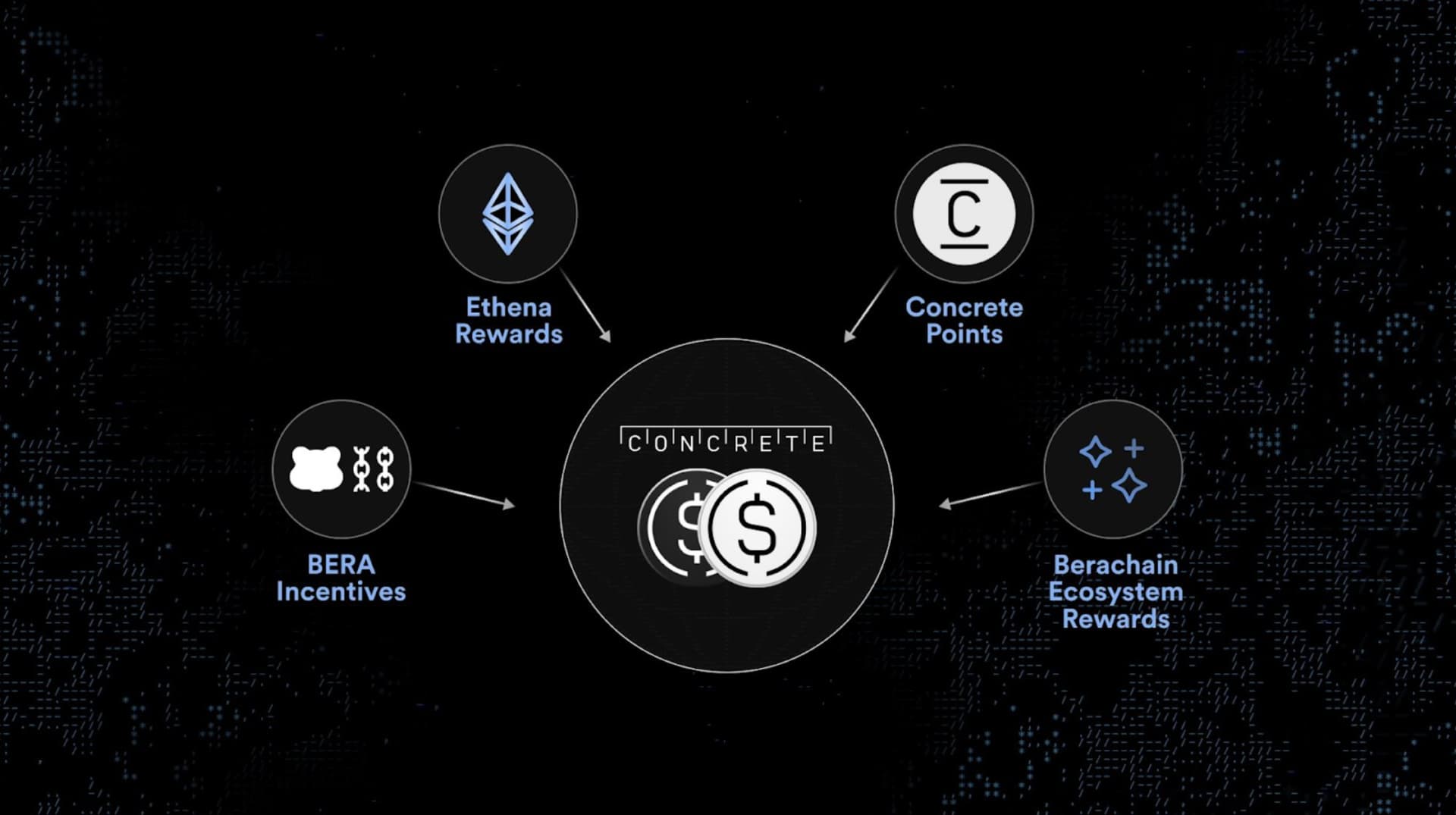
The Ethena pre-deposit vault, powered by Concrete, deployed USDe and sUSDe through strategies across partner protocols, such as Beraborrow, Kodiak Finance, and Dolomite, to generate the highest possible risk-adjusted yields while seeding liquidity throughout the Berachain DeFi ecosystem.
Rewards that were distributed were as follows:
- BERA Incentive
- 30x Ethena multiplier on USDe
- 5x multiplier on sUSDe
- 4x multiplier on Concrete Bags
- 1x Kodiak point
- 1x Dolomite point
After depositing, participants receive ct[ASSET] vault shares that can be swapped through Concrete in the near future. Withdrawals were enabled within 30 to 90 days after the Berachain mainnet launched.
4. EtherFi Vaults
On Dec 31, 2024, Berachain also announced the BTC and ETH pre-deposit vaults from EtherFi, which featured rewards of:
- Berachain Rewards — up to 1%+ of total supply
- 3x KodiakFi points
- Dolomite rewards
- Goldilocks — 8M+ Porridge pool
- 3x Veda points
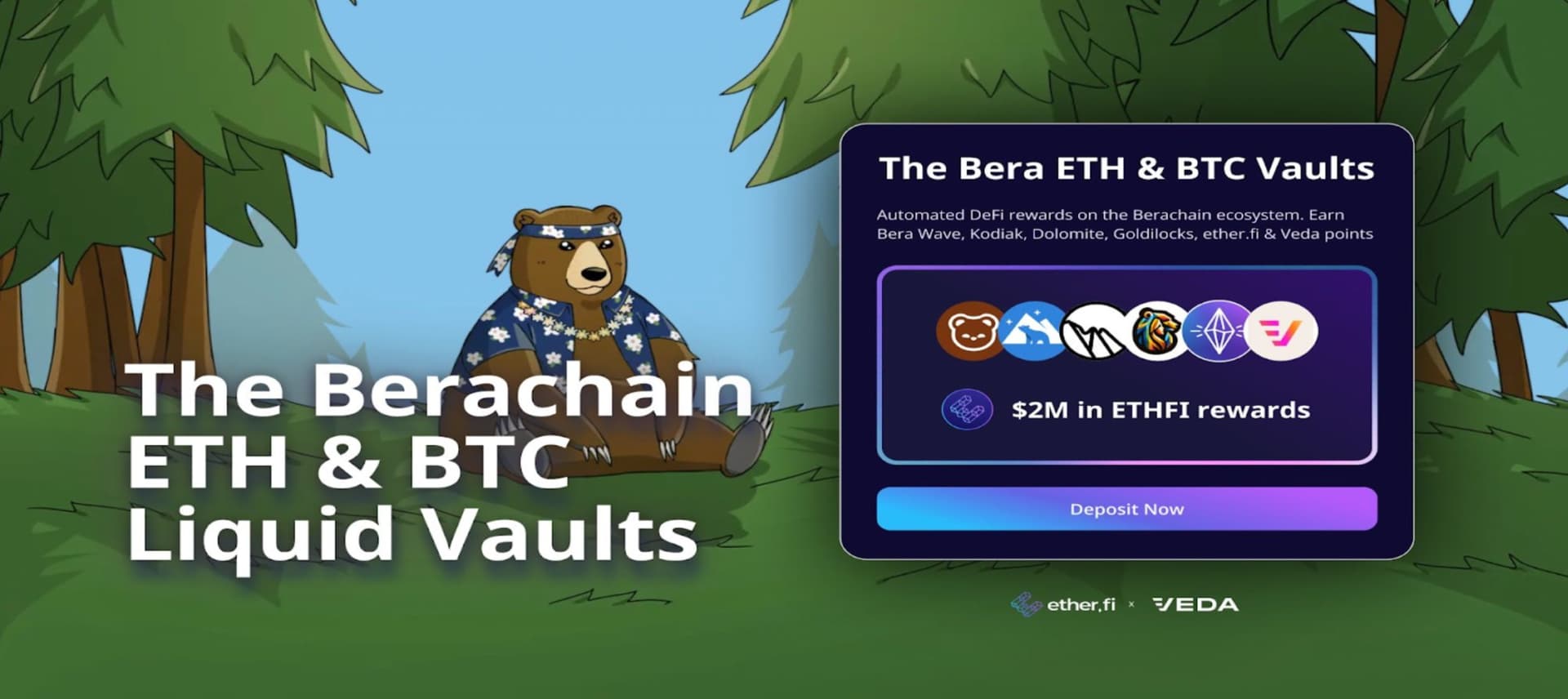
Participants were able to deposit assets like weETH, WETH, stETH, eBTC, wBTC, cbBTC, or LBTC and deposits remained locked for 90 days after the mainnet launch of Berachain. Afterwards, assets will continue to be used within DeFi to earn a competitive yield.
The vault utilised Kodiak (DEX), Dolomite (Borrow and Lending), and Goldilocks (Yield Trading) protocols to execute strategies. The vault was built on the Veda infrastructure.
Note: For EtherFi, only deposits made and remained during the lockup period of the vault were awarded ETHFI and vault rewards, and the rewards will be awarded at the end of the lockup period. Depositors who withdrew before the lockup period forfeited all vault rewards.
5. Usual Money Vault
Usual Money launched its pre-deposit vault on January 3, 2025, offering up to 37% APY plus the Berachain ecosystem incentives from Berachain, Veda, Dolomite, and Kodiak. Participants could deposit USD0, USD0++, USDC, or DAI and positions remained locked for 1 to 3 months post-mainnet.
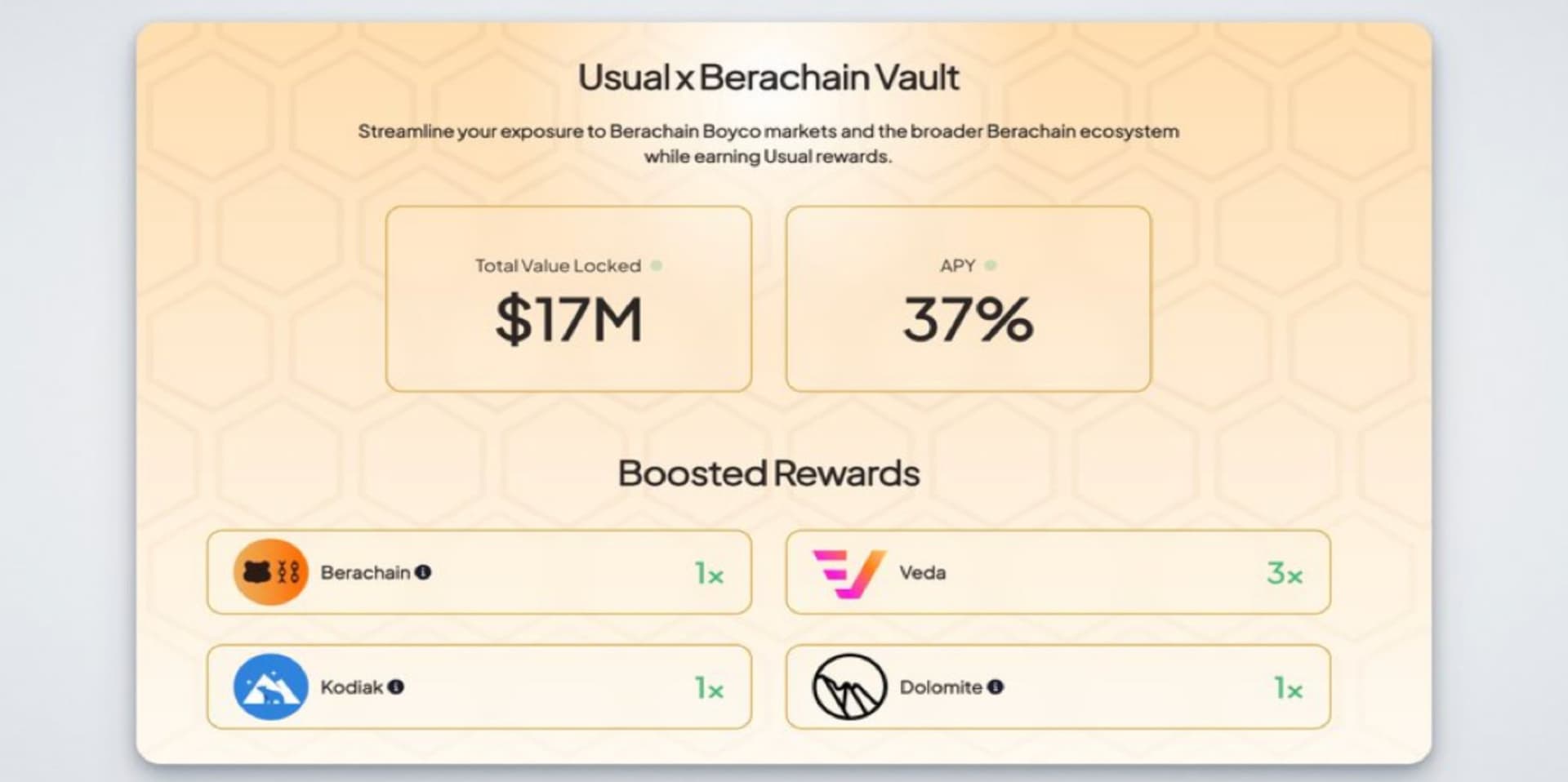
Rewards were subject to vault allocation:
- USD0++ yield (up to 37% at launch)
- BERA incentive
- 1x Kodiak points
- 1x Dolomite points
- 3x Veda points
When depositors want to exit their positions, their yield comes in USD0++; a liquid representation of USD0, locked for a fixed maturity period of 4 years (additionally offering further liquidity and leverage through the Usual Stability Loan). USD0++ innovation lies in its ability to distribute ownership of the Usual protocol to users through $USUAL tokens. This governance token ensures that USD0++ holders share in the present and future revenues of the protocol, providing extra value to the yield distributed in this form. USD0++ is also liquid on the secondary market. You can either mint it via USD0 or trade it directly on the secondary market.

On January 27th, 2025, Veda announced the deprecation of the Usual vault due to conflicts in deployment timing with Boyco. Users were allowed to withdraw their deposits, and as a way of gratitude, Veda credited depositors with 6x Veda points instead of the initial 3x from their deposit date through to January 27th, 2025. The vault was finally deprecated on February 15, 2025.
6. CIAN and Bedrock Vaults
CIAN and Bedrock pre-deposit vaults launched January 7, 2025, giving participants an avenue to farm different tokens and rewards from one deposit, stacking yields across both the Ethereum mainnet and Berachain ecosystems simultaneously. CIAN partnered with Bedrock, PumpBTC, KelpDAO, and Avalon to facilitate liquidity into Berachain through the Boyco pre-deposit campaign.
Users stacked rewards from both BTCFi and Berachain:
Ethereum Mainnet:
- 3x Bedrock Diamonds
- 1x Babylon
- Pendle, EQB, Corn rewards
Berachain:
- BERA incentive
- KodiakFi, Dolomite, Goldilocks, and Beraborrow points
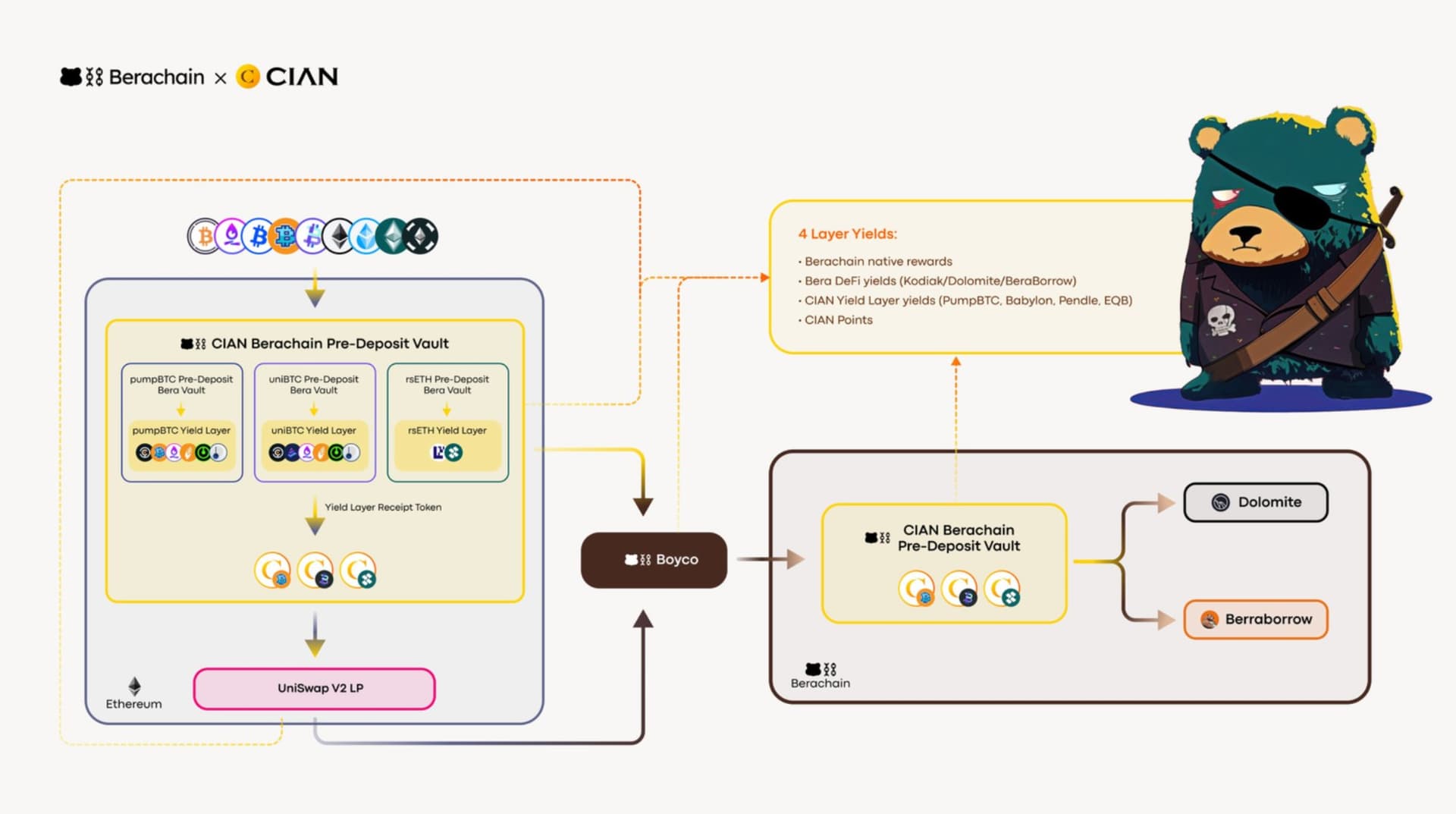
The CIAN vault accepted assets like wstETH, stETH, rsETH, ylrsETH, pumpBTC, ylpumpBTC, uniBTC, yluniBTC, cbBTC, ylBTCLST, USDa, sUSDa, giving holders of these assets early access to Berachain incentives from the Ethereum mainnet. Deposits were locked for 3 months after the Berachain mainnet launch.
CIAN introduced its 4-Layer Unique Yield Structure to help participants maximise their returns:
- Layer 1: Berachain Native Rewards
- Layer 2: Bera DeFi Yields (Kodiak/Dolomite/Goldilocks/BeraBorrow)
- Layer 3: CIAN Yield Layer (Bedrock Diamonds, Babylon, Pendle, EQB)
- Layer 4: CIAN Points
All strategies within the CIAN Berachain pre-deposit vaults on Boyco and Berachain are the same: pairing the receipt token with the principal token to provide liquidity for Berachain (e.g., ylpumpbtc/pumpbtc). The difference lies in the CIAN Yield Layer yields. This vault played a crucial role in providing real cross-chain yield multiplication, auto-compounding 8 different tokens with no ecosystem trade-offs and institutional-grade position management.
7. Solv Protocol Vault
Solv Protocol launched its vault on January 13th, 2025, introducing SolvBTC.BERA (receipt token), allowing users to deposit BTC (or equivalents like SolvBTC.BBN, SolvBTC, WBTC, or cbBTC) into the Berachain Boyco Pre-Deposit Campaign, to offer a streamlined way to earn rewards across the Berachain ecosystem.
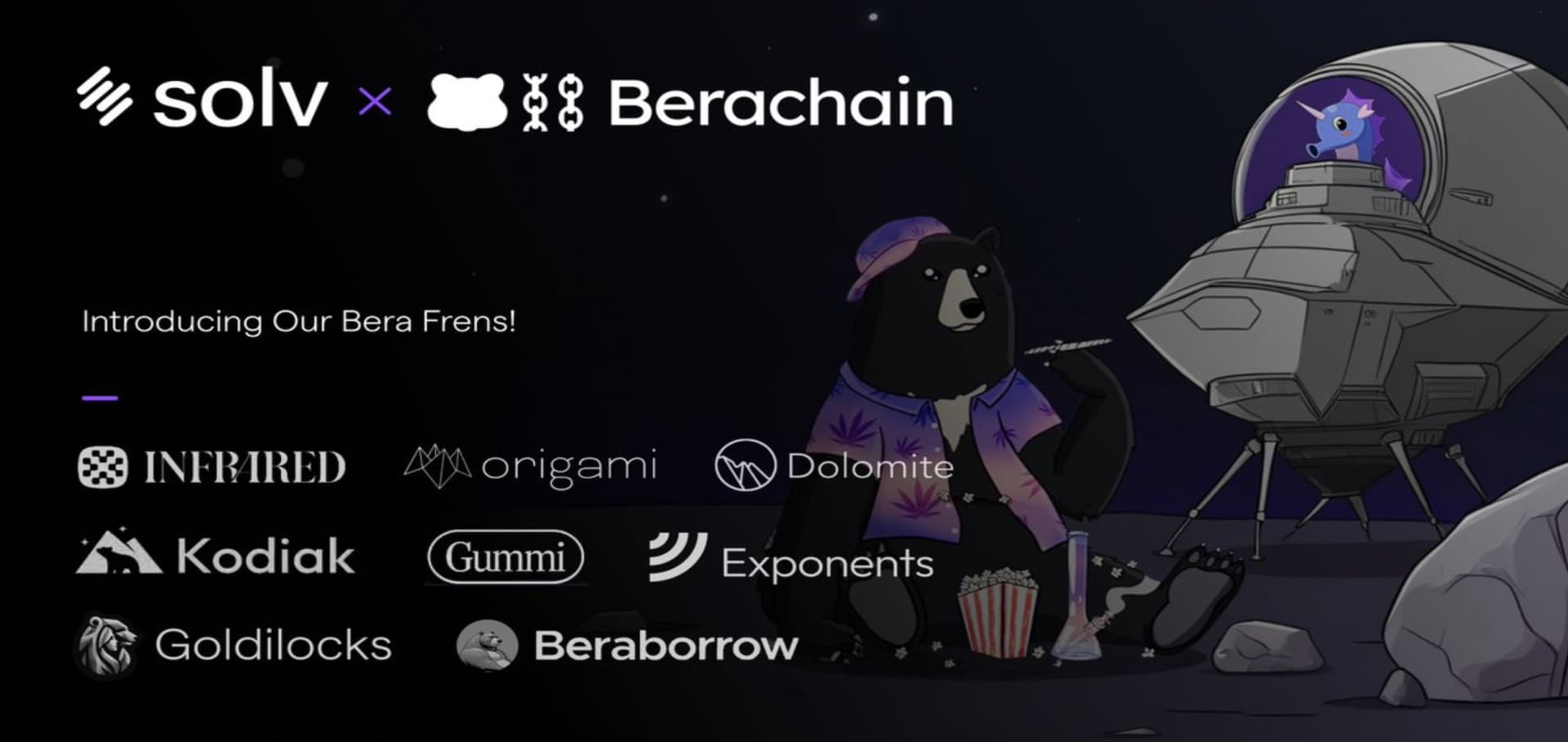
SolvBTC.BERA unlocked yield opportunities across 7 reward layers, including rewards from: Berachain, Kodiak, Dolomite, Beraborrow, Goldilocks, Babylon, and Solv Season 2. These rewards worked together to offer a strong and diverse way to boost BTC holdings for users. Deposits were also locked for 90 days from the Berachain mainnet launch, with rewards airdropped based on stake duration and amount.
After the Berachain mainnet launched, users could stake their SolvBTC.BERA tokens in one of the partner protocols to earn additional $BGT or $iBGT rewards; BeraHub, Infrared, and BeraBorrow. The Base PoL Rewards from SolvBTC.BERA were converted to SolvBTC and distributed at the end of each month. Target Yield for the Solv vault was around ~8% APR (including both PoL and staking rewards).
Even after Boyco ended, Solv continued providing yield for SolvBTC.BERA through the BFF initiative on the Berachain mainnet. Users could bridge their SolvBTC.BERA from other chains like Ethereum, BoB, BNB, to Berachain to keep earning up to 8% in real-time yield through a combination of BGT emissions, Solv S2 points, and team-based community boosts.
8. Dinero beraETH Vault
On January 14th, 2025, Dinero introduced beraETH, a native ETH LST, specific to Berachain. beraETH allowed users to easily stake their ETH from Ethereum or Berachain to earn ETH staking yield. Dinero partnered with the likes of Kodiak, Beraborrow, Infrared, Dolomite, and many others to ensure beraETH is widely integrated and offers a variety of yield opportunities for adopters.
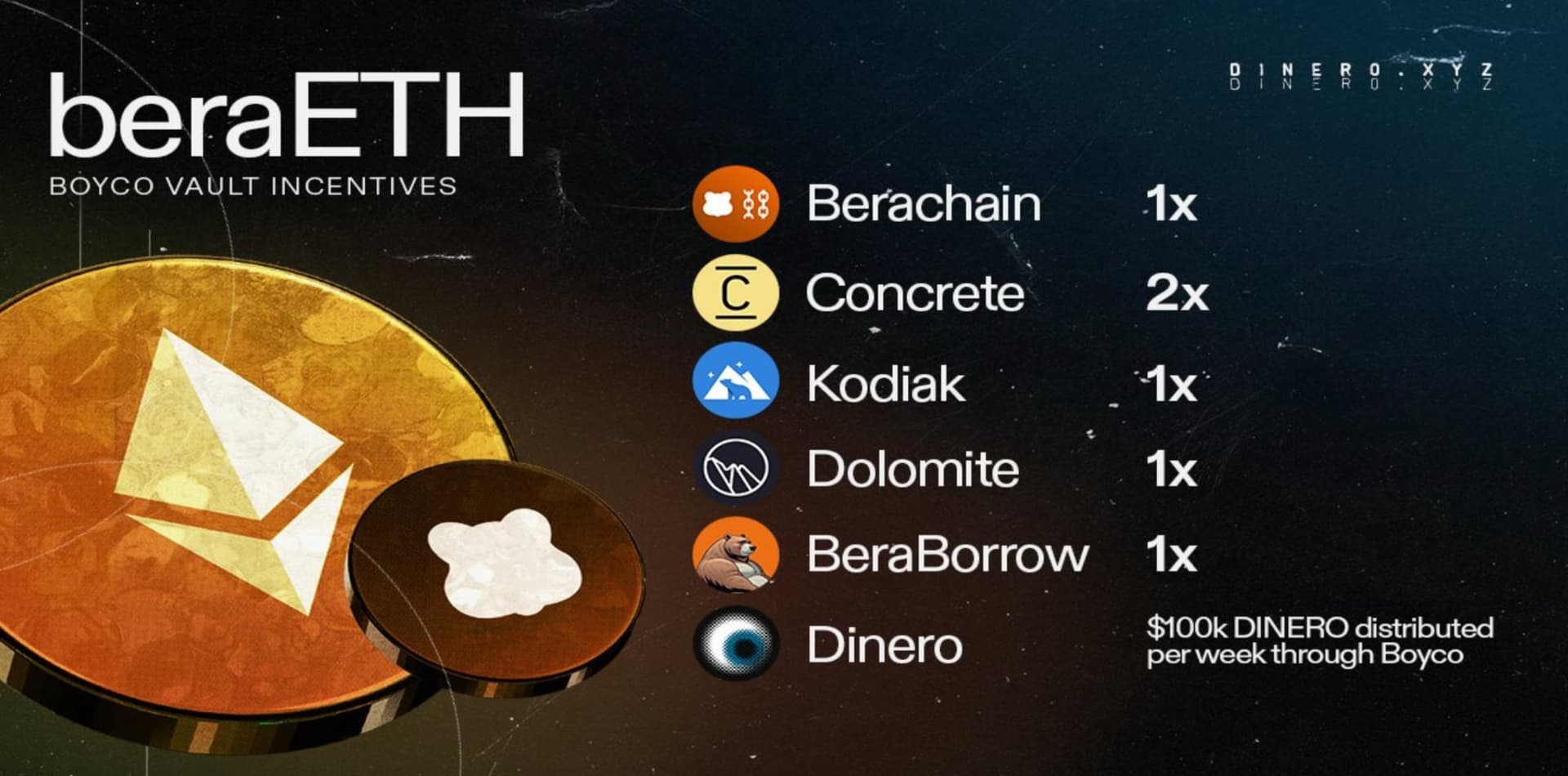
The Dinero Pre-deposit vault offered multiple incentives to attract depositors ahead of the Boyco launch:
- DINERO rewards
- BERA incentive
- 2x Concrete Points
- 1x Kodiak points
- 1x Dolomite points
- 1x Beraborrow points
When the Berachain mainnet launched, deposits were migrated from the Ethereum mainnet and deployed on behalf of depositors to various DeFi strategies in partner protocols.
Boyco Goes Live
Boyco officially went live on Royco on January 28, 2025, having already seen over $2.2 billion in pre-deposits. The program ran for a few days before the liquidity was bridged over to the Berachain mainnet, and the lockups were enforced there. Participants saw over 100 Berachain markets with up to 56 assets available during the Boyco campaign, which gave them the freedom to make a single-sided deposit or a two-sided deposit.
The single-sided deposits were allocated to applications similar to a money market pool, while two-sided deposits (stable and volatile pairs) were allocated to concentrated liquidity positions, rewarding depositors with BERA and project-based incentives.
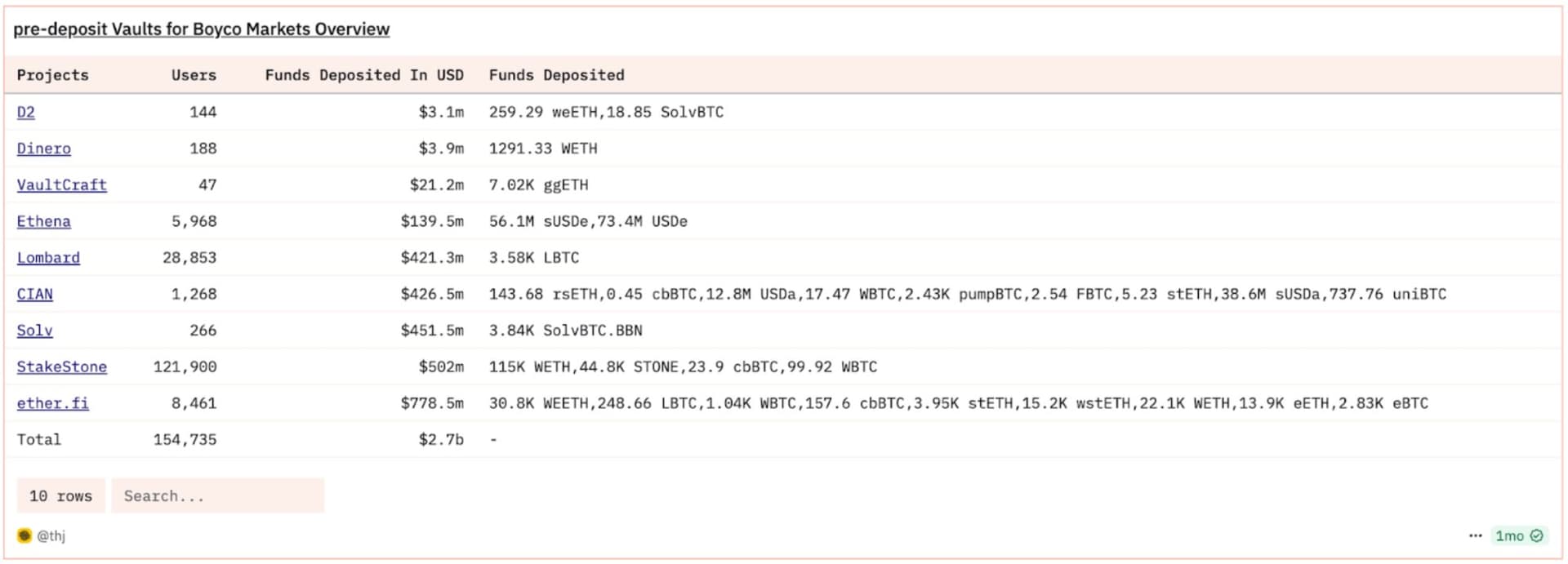
Boyco pre-deposits saw inflows from various vault partners, including D2, EtherFi, Dinero, VaultCraft, Ethena, Lombard, CIAN, Solv, StakeStone, with EtherFi having the highest deposit of $778.5M.
Pros and Cons of the Pre-Deposit Vaults
Pros:
- Early access to Boyco — users were able to stack rewards before the campaign started.
- Automanaged deposit strategy — vault partners allocated deposited funds on behalf of users to Berachain-native protocols on mainnet.
- Simple, one-click user experience.
- No impermanent loss and no active management required.
Cons:
- Withdrawal locked for up to 90 days — though some vaults by Concrete allowed trading of the vault receipt token, or even borrowing against the underlying position.
- Mercenary capital overhang.
- Token price dependence — the real "value" of Boyco deposits hinged on the BERA token and its price.
- Limited choice — if you had a specific preference for an asset or protocol, you had to wait for Boyco to actually go live.
Royco's Rise and Berachain Mainnet
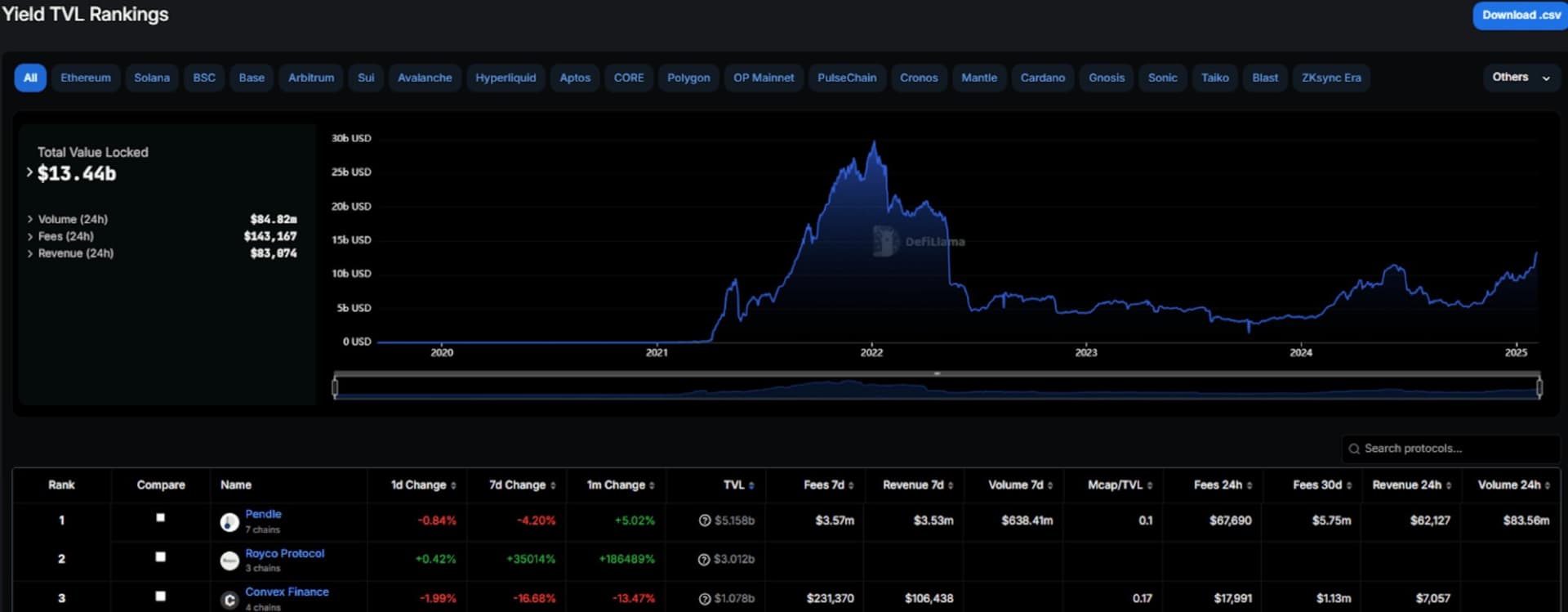
With the deposit inflow into Boyco, Royco's performance skyrocketed, with its TVL soaring over 180,000% in a month, and breaking through US$3 billion. Royco quickly became a top 14 DeFi protocol, and second place on the Yield protocol ranking, according to DefiLlama, just one step away from first place Pendle.
On February 6, Berachain's mainnet went live, and its token BERA was listed on Binance and other major exchanges. This increased the market share and liquidity for Berachain and Royco, and it became a new discussion in the entire DeFi space. BERA has a 500M total supply with 10% annual inflation via BGT emissions, subject to governance.
Berachain also distributed airdrop rewards to early supporters, testers, and builders in the ecosystem. There was sentiment around the airdrop not rewarding onchain testers rightly, because the majority of the rewards went towards NFT holders and social contributors, who were a small portion compared to the testers. This resulted in more BERA liquidity being in the hands of a few folks who could insta-dump huge allocations, as there was no lock-up for this reward.
Peak Performance
Within weeks of launch, the Berachain ecosystem was on top of the moon. On March 28, 2025, TVL reached an ATH of $3.419B, token price BERA sitting above $8.5, stablecoins market cap reached an ATH of $1.32B.
Around this period, March 25, 2025, POL also went live on Berachain's mainnet, redefining how incentives and user rewards work. POL utilises network incentives to align the interests of ecosystem participants and enhance both the application-layer and chain security, employing a two-token model: BERA, which secures the chain, and BGT, which facilitates governance and rewards users who provide liquidity within the ecosystem.
Proof-of-Liquidity seems like an ambiguous concept to many users, as it involves multiple activities to realise its full potential. These activities may seem boring, but users still enjoyed the rewards. Some pools like the WBERA|LBGT yielded over 600% APR in BGT, atop of the pool APR.
Boyco Ends
Fast forward to the end of Boyco on May 6, 2025, everyone had access to their locked deposits and got their rewards. It was easy for depositors to move their assets from Royco directly into new strategies on Berachain with the help of the 1-click rollover feature; no bridge or manual swap was required.
According to Dune data, the Boyco campaign attracted a total of 166,784 participants and over $3.7B in deposits. These figures include deposits into Boyco and pre-deposits into partner protocols like StoneBeraVault, Ethena, EtherFi, CIAN, SolvProtocol, and VaultCraft.
The Regression
Despite the success of the Boyco campaign and its staggering effect on the growth of Berachain, many participants were dissatisfied with their rewards. People who were eager to withdraw their funds didn't hesitate to take action, as the rewards were not particularly encouraging.
Some mixed feelings from participants:
- One participant got 10 BERA for a 3 ETH deposit, returning 1.27% in annualised yield.
- Another got 11 BERA tokens for a $10k deposit — that's a 1.272% annualised return for 3 months.
- One post claimed to get 0.87 BERA for 5 months of holding (probably pre-deposits before Boyco launched).
- Some participants mentioned that their allocation was given to Binance and influencers.
- Some even used the "scam" tags under Berachain X posts.
- Others raised concerns about pre-deposit partners.
The APY mentioned here is calculated based on the price of the asset when Boyco launched and the price of BERA when the reward was distributed.
What happened after the Boyco reward distribution? The image below says it all. Key metrics on Berachain, such as fully diluted value (FDV), active addresses, total value locked (TVL), trading volume, and fees generated, started to plummet and have been on a downtrend for the past 120 days.
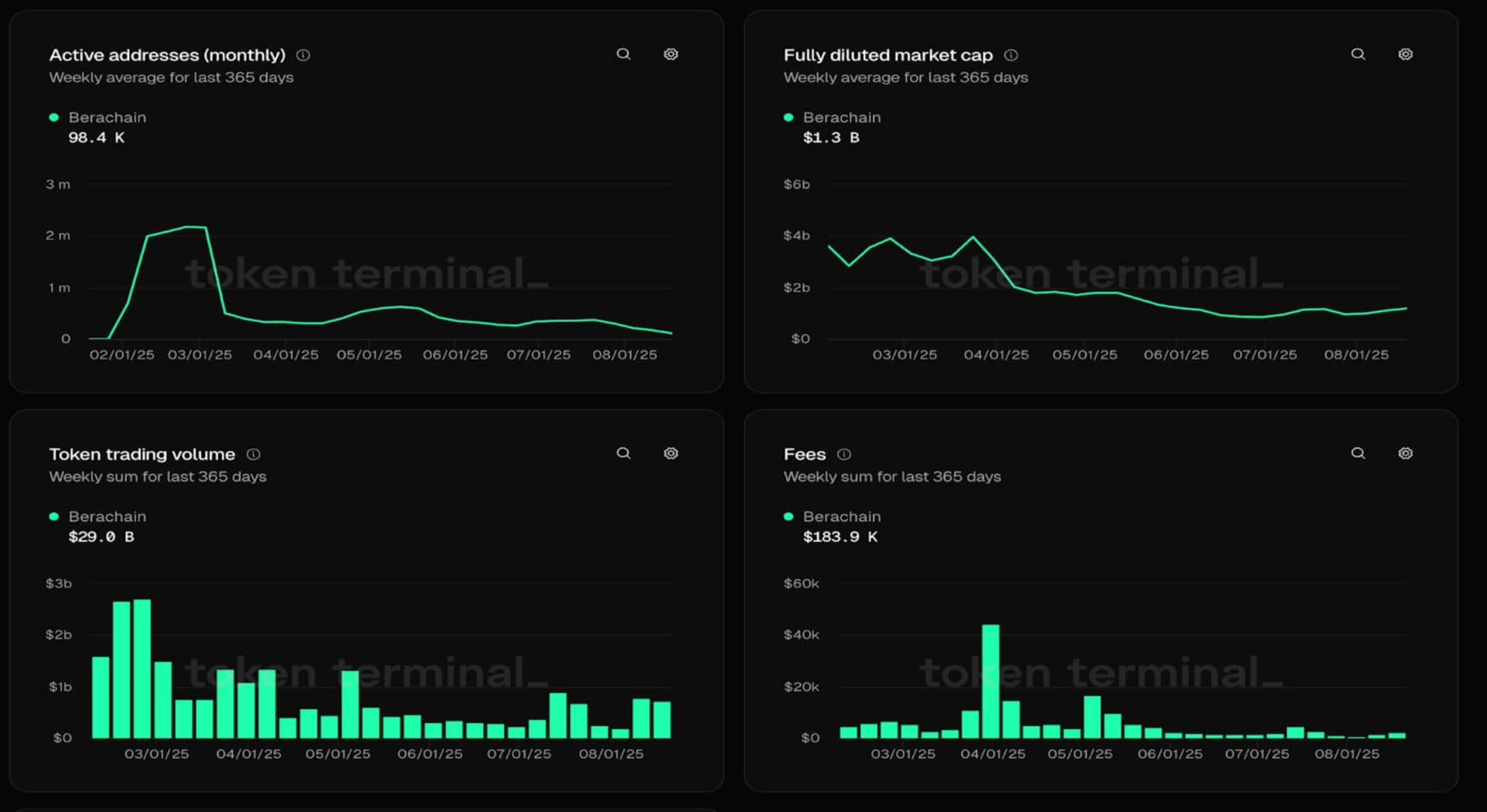
As of the time of writing (30/08/2025), Berachain's TVL is down 80.5% ($402.86M) from its all-time high ($3.419B), according to DefiLlama. BERA's price is down 76% ($2.68) from its all-time high ($14.9), according to CoinMarketCap.
Why Did TVL Collapse?
The huge outflows since late March, when it hit its ATH, can be linked to a few rationales.
Sentiments Towards Rewards
Much of the deposit enthusiasm was tied to reward expectations. When token price performance fell short of the hype, the value of rewards dropped sharply. This created disappointment among depositors, who expected higher ROI from their early participation. Initially, the Boyco Rewards were meant to be distributed during the TGE, but the decision was overturned, raising concerns from depositors.
The Boyco Rewards system was supposed to act as the bridge between deposits and meaningful allocations. Instead, many users found the conversion unclear, less valuable than expected, and poorly aligned with actual ecosystem participation. This mismatch hurt trust and retention.
Proof-of-Liquidity Complexity
Berachain's much-touted Proof-of-Liquidity (PoL) mechanism relies on a token flywheel: higher token prices create better incentives, which attract liquidity, which in turn supports prices. The reverse is also true; falling prices make rewards less attractive, reinforcing outflows. Add to this the multi-token design of PoL, and many users found it too complex compared to competitors like Blast, where rewards and user journeys are simpler.
Many users didn't really understand how the mechanics behind POL worked, but some didn't mind because the rewards were juicy. What happened after the rewards started diminishing is the effect we see now.
Not Capping Boyco TVL
The Boyco campaign allowed unlimited deposits during its pre-deposit phase. At first, this seemed like a strength; it helped push TVL to an all-time high in March. But without a cap, every additional dollar diluted the rewards because the reward was fixed (2%). This meant that as more users deposited, the value of rewards per depositor got thinner. This particular flaw from the campaign design was also acknowledged by one of Berachain's co-founders, @SmokeyTheBera, on X.
Early participants who expected a high ROI suddenly found their rewards diluted when billions more flowed in. When expectations weren't met (token price + unclear deposit conversion to reward), this same liquidity was the first to leave, causing the drawdown in TVL.
Unused Capital Depressed Yield Efficiency
Deposits were locked for 90 days, except for D2 and Dolomite, who ran a 30-day Boyco market. A large share of deposits went unborrowed, meaning the ecosystem wasn't generating real yield or organic demand for its assets. Without efficient capital utilisation, high TVL is just a vanity metric that doesn't translate into sustainable growth. While a $3B+ TVL looked like a success, much of it was idle and unutilised, and this isn't sustainable for the chain long-term.
Mercenary Capital, Little Engagement
Most of the deposits were parked passively, with very low borrowing or activity in connected protocols. This points to capital inefficiency: billions were deposited, but much of it sat unused, contributing neither to DeFi activity nor to ecosystem stickiness. The rapid drop in TVL indicates that the influx of capital was largely driven by short-term, reward-seeking behaviour rather than genuine ecosystem adoption.
Post-Campaign Retention
Some capital retention stats based on 1d/7d/30d/90d TVL:
| Timeframe | TVL | Change from Day 0 |
|---|---|---|
| Day 0 (Campaign end) | $2.518B | — |
| 1 day | $2.304B | -8.5% |
| 7 days | $1.265B | -50%+ |
| 30 days | $884.85M | -65% |
| 90 days | $454.18M | -82% |
All TVL figures were sourced from DefiLlama.
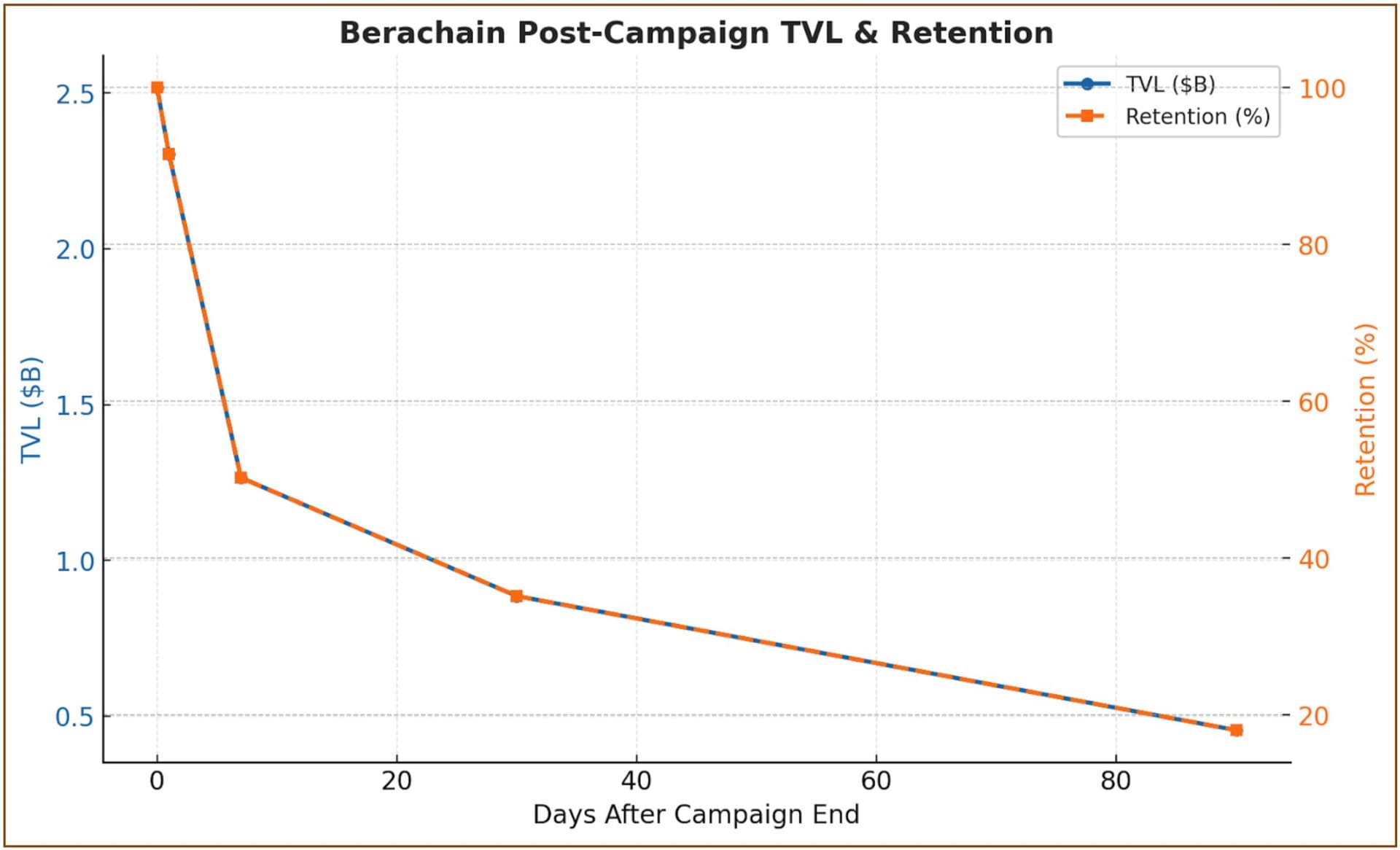
This illustrates the post-campaign decay effect, where most liquidity was mercenary capital chasing short-term incentives rather than sticky ecosystem usage.
The Bigger Picture
Berachain's pre-deposit campaign proves that incentives can bring in huge liquidity, but it also highlights the fragility of such growth when rewards aren't backed by clear utility or sustainable token economics. If we rewind and ask "what could have been done differently?", a set of counterfactual strategies emerges that new blockchains can adopt to retain users and improve return on ecosystem (ROE).
Prioritise Capital Efficiency
Idle capital is wasted capital. If deposits don't flow into borrowing, lending, or liquidity pools, the ecosystem looks large but acts hollow. Berachain's $3B headline TVL often didn't circulate, which undercut ROE.
Reward efficient capital deployment over static staking; allocate deposits to lending to earn higher rates, LPs in stable pairs receive bonuses for driving trade volume, while "idle" vaults generate only minimal yield. In practice, this means the chain's health is measured not just in TVL, but in how much that TVL is working.
Cap TVL With Tiered Reward Curves
Boyco TVL wasn't capped, so early whales piled in, and later entrants saw sharply diluted returns. When ROI visibility dropped, exit waves followed.
Introduce caps or diminishing reward curves. The first $500M of deposits earn 100% rewards, the next $500M (up to $1B) earn 50%, and deposits above $1B receive only minimal points. This protects small and mid-sized participants, avoids mercenary overloading, and keeps ROI legible. Blast's early airdrop design partially adopted this with caps and multipliers, helping sustain engagement beyond the first inflows.
Align Rewards with Real Ecosystem Participation
Most Boyco deposits ultimately remained idle; they didn't actually strengthen Berachain's lending, trading, or liquidity systems. Rewards went to deposits that didn't translate into activity; this seems like a red flag for long-term sustainability.
Rewards can be distributed based on ecosystem usage metrics, not just deposits. For instance: LPers who provide liquidity onchain get higher multipliers, lenders and borrowers earn boosted points compared to idle depositors, and governance participants gain bonus weight. This turns rewards into a flywheel; users must actually use the chain for it to benefit them.
Simplify User Journeys in Incentive Mechanisms
Berachain's Proof-of-Liquidity (PoL) design is ambitious but difficult to follow. Users had to navigate multiple token loops, often leaving even experienced DeFi natives scratching their heads. While complexity can create hype among power users, it discourages the next wave of users.
Streamline incentives into a clear, linear journey — "Deposit, Earn, Influence governance." The fewer steps it takes for users to see tangible results, the higher the retention. Sonic's early design shows this well: a simple deposit-to-yield flow, with governance hooks layered later.
Restore Confidence in Token and Airdrop Value
Berachain's token and airdrop expectations were never clearly anchored. As the market repriced the upside, confidence eroded quickly. The dissatisfaction among many testnet users in the initial drop, the reduction in rewards, and the POL design affected the BERA token price.
Historically, well-executed initial airdrops have helped projects like Hyperliquid, Arbitrum, Aptos, and OP Mainnet stay relevant over the years.
Design transparent airdrop frameworks which apply clear value distribution bands, introduce soft vesting to prevent instant dumps, and reward consistent usage over time with loyalty multipliers. When users trust that their effort will translate into tangible value, they stay.
Key Takeaways
- Stacked rewards + points integrations were the main accelerant for inflows.
- Sequenced announcements of vault partners created multiple inflow spikes.
- Soft locks and rollover mechanics helped avoid a "day-1 mainnet TVL cliff," but longer-tail retention challenges remained.
- The campaign set a benchmark: $2B+ in pre-deposits, but less than 50% TVL retention at 90 days — a cautionary baseline for future campaigns.